
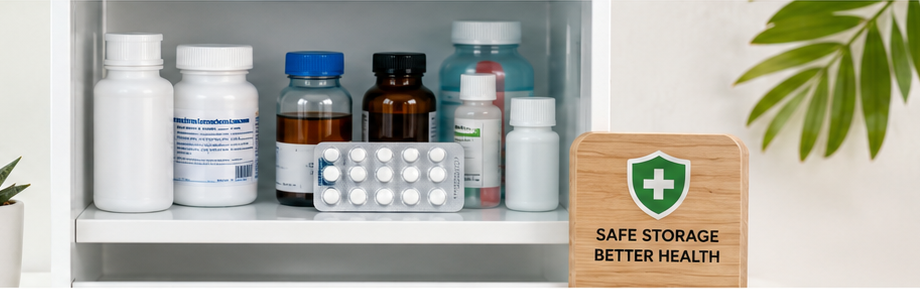
Introduction
Proper medication storage helps maintain the quality, safety, and effectiveness of your medicines. Incorrect storage can reduce a medication’s effectiveness and may even make it unsafe to use.
Store Medicines in a Cool, Dry Place
Most medications should be kept in a cool, dry location away from direct sunlight and excessive heat. Bathrooms are often not ideal because humidity from showers can affect certain medicines.
Always read the storage instructions on the medication label.
Keep Medicines Out of Reach of Children
Accidental poisoning is a common household emergency. Store medications:
- In a locked cabinet if possible
- Out of sight and reach of children
- In their original containers with labels intact
Avoid Mixing Medicines
Keep medications in their original packaging to prevent confusion. Prescription labels contain important information about dosage, expiration dates, and instructions.
Check Expiration Dates Regularly
Expired medications may not work as intended. Review your medicine cabinet every few months and safely dispose of expired or unused medicines according to local disposal guidelines.
Travel with Medications Safely
When traveling:
- Carry medications in your hand luggage.
- Keep prescriptions in their original containers.
- Bring enough medication for your entire trip plus a few extra days if possible.
Ask Your Pharmacist
If you’re unsure whether a medication should be refrigerated or stored at room temperature, your pharmacist can provide the correct guidance.
Conclusion
Safe medication storage protects your family and helps ensure your medicines remain effective. Simple storage habits can make a significant difference in maintaining your health and preventing accidental misuse.